AstroCompass
MICA Master's Capstone exploring astrology as a wellness platform through research, AstroCaching, and gamified learning.
- Client
- MICA Master's Capstone — published on UX Collective
- Category
- Product Concept · UX Research · Design System
- Year
- 2021
The problem
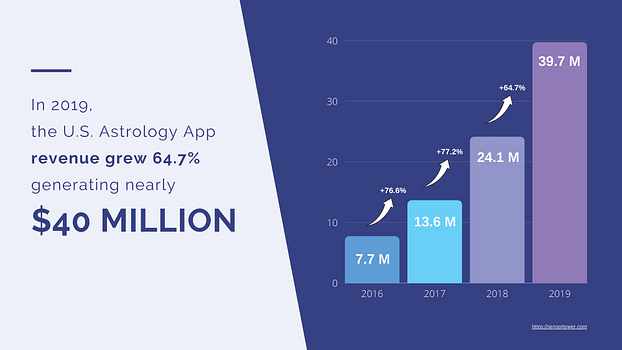
Astrology is often reduced to a sun sign and used for marketing rather than wellness and self-awareness. Meanwhile, young adults navigating life transitions need reliable tools to build clarity and decision-making skills. The opportunity was to create a product concept that treats astrology as a credible wellness and learning platform, not entertainment.
My role
Product Designer & Researcher
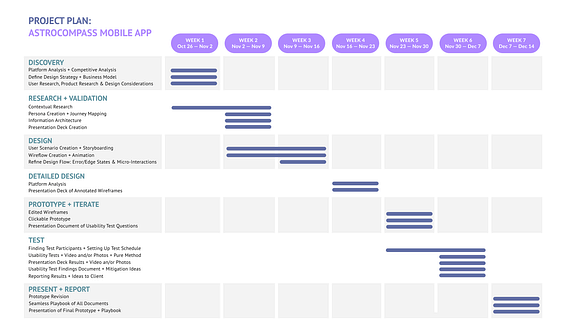
- Led product concept, competitive research, and usability study design for an eight-week Master's capstone.
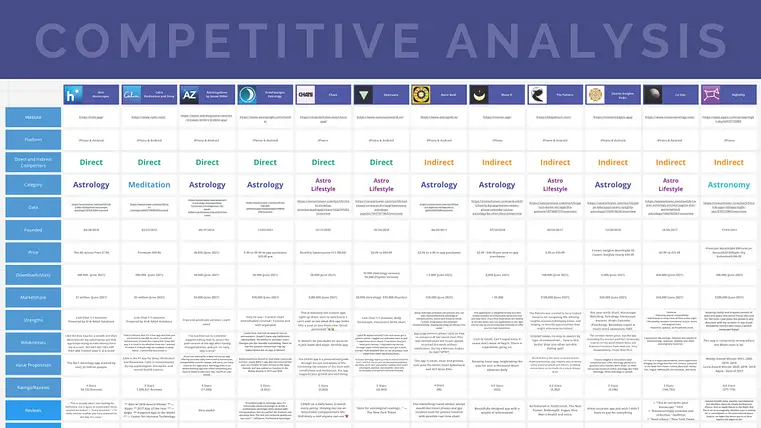
- Audited 200+ astrology apps to identify saturated patterns and white space.
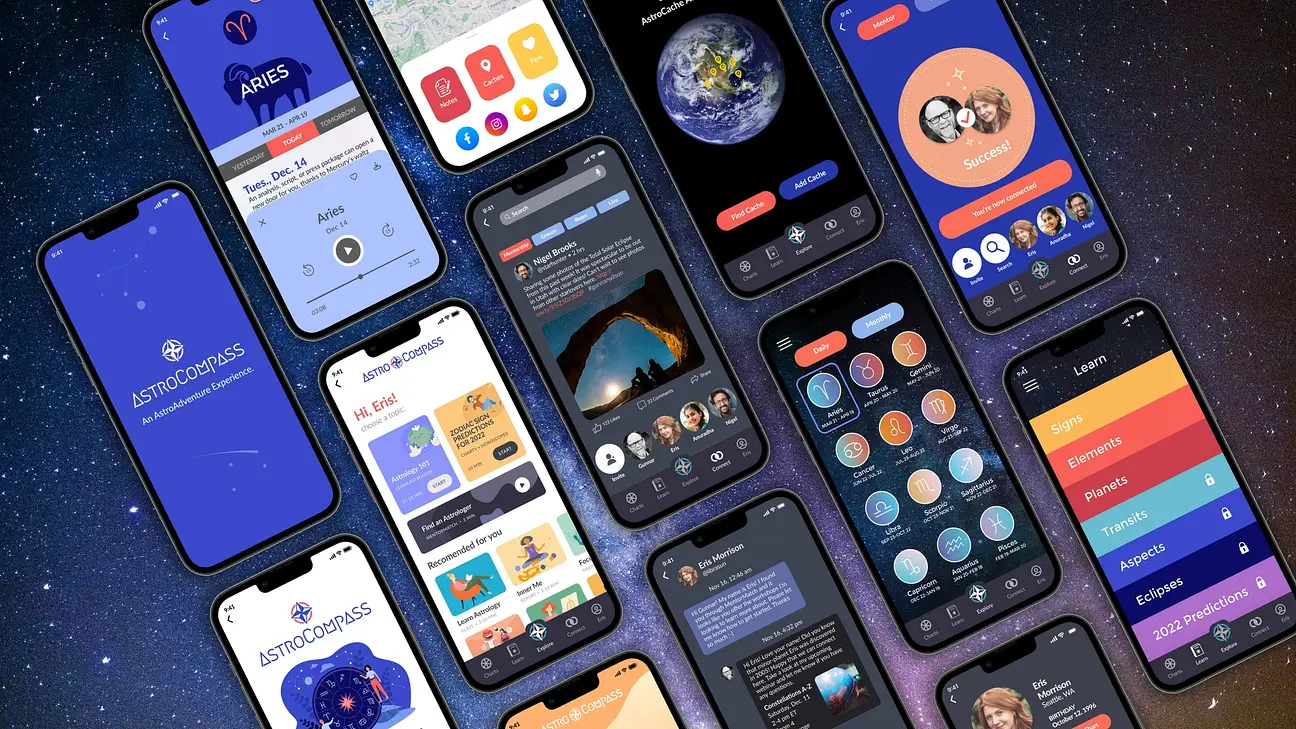
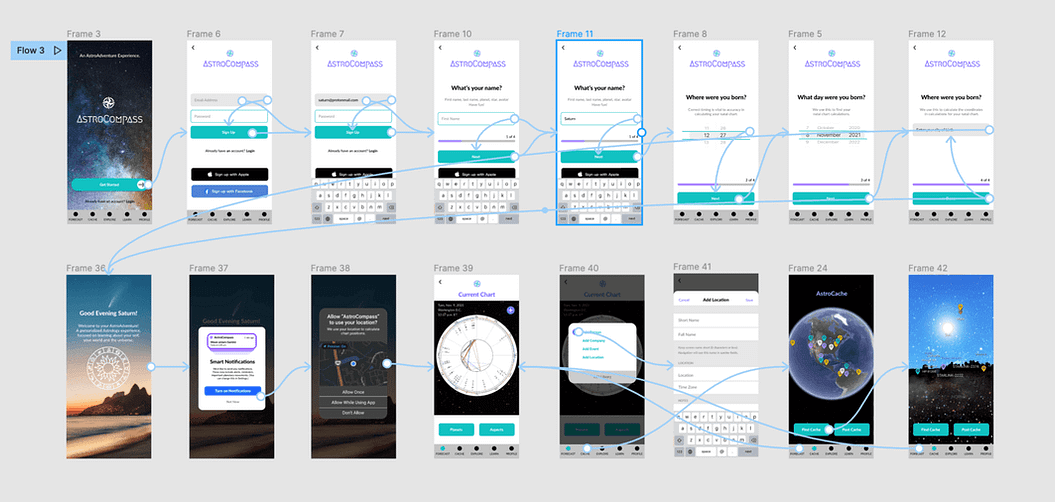
- Designed AstroCaching — a gamified geolocation feature that turns learning into discovery across time, place, and sky.
- Built a visual identity and design system anchored by a compass metaphor and a warm celestial palette.
- Conducted usability tests with five participants across three sessions to refine onboarding, subscription, and AstroCache flows.
Process
- Step 01
Research & White Space
Audited 200+ astrology apps and surveyed enthusiasts to identify a gap between entertainment-oriented products and credible wellness tools.
- Step 02
Concept & Differentiation
Created AstroCaching — a gamified geolocation feature that turns celestial learning into physical discovery — as the core differentiator.
- Step 03
Prototyping & Testing
Built mid- and high-fidelity flows in Figma and tested onboarding, subscription models, and AstroCache interactions with target users.
Brand palette
- Deep Navy#1A2A4APrimary — celestial backgrounds, depth
- Teal#2A9D8FPrimary — navigation, trust signals
- Melon Orange#FF8C69Accent — adventure, action
- Soft Purple#9B8FBFSecondary — celestial highlights
- Cream#F5F1E8Secondary — supporting surfaces
In the wild
Measurable results
AstroCompass taught me that the strongest product concepts emerge from personal expertise combined with rigorous research. The biggest lesson was the value of testing earlier and more frequently.
From MICA thesis to UX Collective
AstroCompass was originally developed as my MICA Master's Capstone thesis project in 2021. The case study was later published on UX Collective Bootcamp via Medium as "Virtual time travel at your fingertips."